
Walk down any snack aisle today and nearly everything claims to be “healthier” in some way — low sugar, natural, guilt-free, clean.
The trouble is, these words aren’t regulated the way you’d hope, which means two products with almost identical labels can be nutritionally very different.
Here’s how to actually tell a better-for-you snack from a regular one wearing a health costume.
-
Check “No Added Sugar” vs. “Sugar-Free”
These sound similar but aren’t.
“No added sugar” means no sugar was added during processing, though the product may still contain naturally occurring sugars from fruit.
“Sugar-free” often means sugar has been replaced with sugar alcohols, like maltitol or sorbitol, which can cause bloating or digestive discomfort in sensitive people when eaten in quantity.
Neither is automatically better — it depends what replaced the sugar.
What to look for instead: ingredients like isomalto-oligosaccharide, also known as IMO, a prebiotic fibre that sweetens naturally while also supporting gut health, rather than a sugar alcohol.
-
Look Past “Natural Flavours”
“Natural flavours” is a legal catch-all term that can include dozens of compounds, as long as they’re derived from a natural source.
It doesn’t tell you much on its own.
A stronger signal is a brand naming the actual source — “natural apple flavour” or “coloured with plant extracts” — rather than leaving it vague.
-
Ingredient Order Matters
Ingredients are listed by weight, heaviest first.
If sugar, corn syrup, or glucose syrup are in the first three ingredients, the “healthy” claim on the front of the pack is doing a lot of heavy lifting.
Better-for-you snacks should show functional or whole-food ingredients earlier in the list, not buried at the bottom.
-
Watch for Vague Health Claims Without Numbers
“Packed with vitamins,” “boosted with antioxidants,” and “superfood-infused” are common phrases that mean very little without a quantity attached.
A brand confident in its formulation will usually tell you what’s in it and roughly how much, not just that something is present.
-
Dietary Claims Should Be Specific and Verifiable
Vegan, gluten-free, and non-GMO are useful claims — but only when they’re backed by actual formulation choices you can check in the ingredients list.
For example, pectin instead of gelatin for a vegan gummy, not just printed on the front because it’s trendy.
A Real-World Example: Valli Snacks
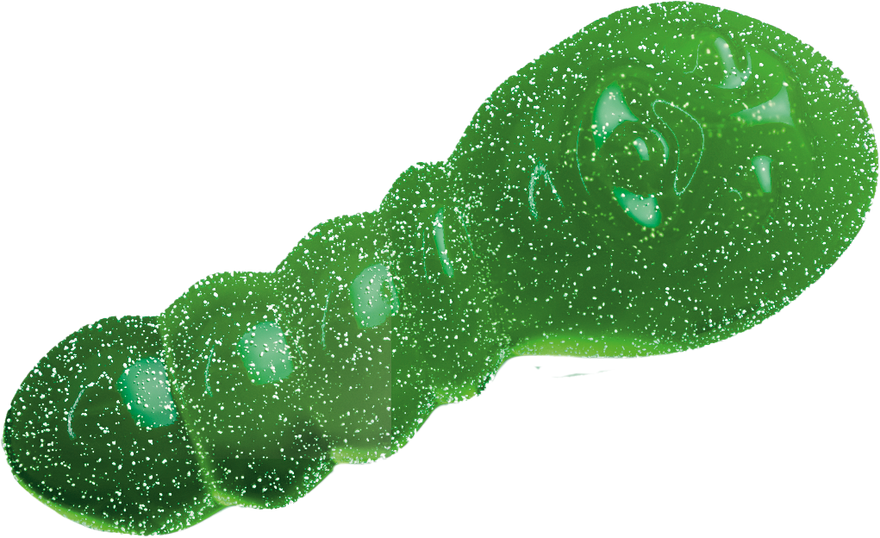
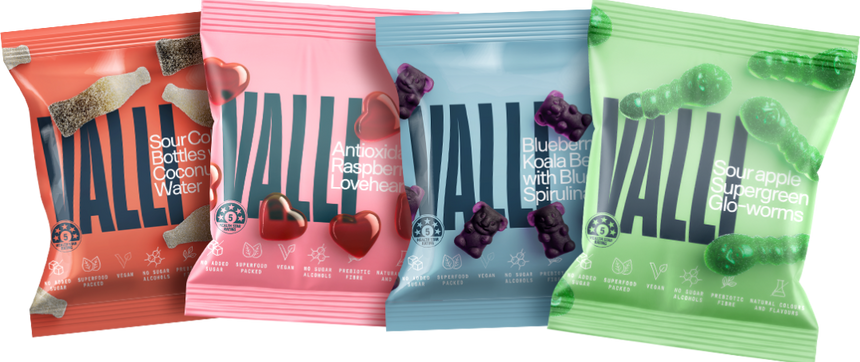
To make this concrete, here’s how Valli Snacks gummies hold up against this checklist:
What to check: Added sugar
Valli Snacks: None — sweetened with isomalto-oligosaccharide, a prebiotic fibre.
What to check: Colouring
Valli Snacks: Natural colours from plant extracts, including real blue spirulina.
What to check: Gelatin or animal products
Valli Snacks: None — made with pectin, fully vegan.
What to check: Named functional ingredients
Valli Snacks: Yes — spirulina, beetroot, goji, açai, coconut water, and wheatgrass, depending on flavour.
What to check: Health Star Rating
Valli Snacks: 5 stars.
This is the kind of transparency worth looking for in any snack you’re choosing to trust with the word “healthy.”
The Takeaway
“Better-for-you” only means something when you can verify it on the label.
Learn to skip past the front-of-pack marketing and go straight to the ingredients — that’s where the real story is.
Want a snack that actually holds up to scrutiny? Explore the Valli Snacks range and check the label for yourself.