

“Antioxidant-rich” has become one of those phrases that shows up on so much packaging it’s practically lost meaning — said about everything from smoothies to skincare, rarely explained. But the underlying science is genuinely interesting and reasonably simple once it’s unpacked properly. Here’s what’s actually happening at a cellular level, and why goji berry and açaí specifically keep coming up in that conversation.
What a Free Radical Actually Is
Every day, your body generates unstable molecules called free radicals, as a normal by-product of everyday processes like converting food into energy. They’re also produced in response to external stressors — pollution, UV exposure, cigarette smoke, and general life stress all increase free radical production.
The instability is the key part: free radicals are missing an electron, and in their search to stabilise themselves, they can grab electrons from nearby healthy cells, damaging them in the process. This cell damage, accumulated over time, is what’s referred to as oxidative stress — a process implicated in accelerated ageing and a range of chronic health conditions when it consistently outpaces the body’s ability to repair it.
Where Antioxidants Come Into the Picture
Antioxidants are compounds that can donate an electron to a free radical without becoming unstable themselves, effectively neutralising the threat before it damages a healthy cell. Your body produces some antioxidants internally, but a significant portion of your antioxidant defence comes from diet — which is exactly why foods rich in these compounds get so much attention in nutrition science.
This isn’t a fringe or trendy claim; it’s well-established biochemistry. The trendy part is which specific foods get marketed as the best sources, and that’s where goji berry and açaí have carved out a reputation.
Goji Berry, Under the Microscope
Goji berries (also called wolfberries) have a long history in traditional Chinese medicine and a more recent surge in Western wellness popularity. What actually shows up nutritionally:
-
A notably high vitamin C content, well above many comparable dried fruits
-
Zeaxanthin and lutein, two antioxidant carotenoids specifically linked to eye health — particularly protecting against age-related macular degeneration, one of the more well-supported specific benefits in this space
-
A reasonable fibre and protein content for a dried fruit, outperforming something like raisins on both counts
Most commonly eaten dried (similar to raisins) or blended into smoothies, goji is increasingly appearing as a concentrated extract or powder in formulated foods.
Açaí, Under the Microscope
Açaí comes from a palm native to the Amazon rainforest, and has become one of the most recognisable “superfood” ingredients globally, largely through açaí bowls. What actually shows up nutritionally:
-
A very high anthocyanin content — the same antioxidant class responsible for the deep purple colour in blueberries and blackberries, associated with cardiovascular and anti-inflammatory benefits in research
-
A notably high overall antioxidant capacity, frequently cited in comparative studies against other fruit
-
Healthy fats, giving açaí a creamier texture than most berries once blended, and distinguishing it nutritionally from lower-fat fruit sources
Because fresh açaí spoils quickly and doesn’t travel well outside its native growing regions, it’s almost always consumed elsewhere as a frozen purée, powder, or extract.
Putting This in Context: You Don’t Need Exotic Ingredients to Get Antioxidants
It’s worth being honest here: goji and açaí aren’t uniquely magical, and you don’t need imported “superfoods” to get meaningful antioxidant intake. Blueberries, dark leafy greens, dark chocolate, and even coffee all contribute substantially to a typical diet’s antioxidant load. What goji and açaí offer is a particularly concentrated dose in a small serving — useful, but not a replacement for a generally varied, plant-rich diet.
The Real Barrier Isn’t Awareness, It’s Habit
Most people already know berries and greens are good for them. The actual gap is behavioural: buying dried goji berries or açaí powder requires an active decision each time, and unless it’s already folded into an existing routine — a daily smoothie habit, for instance — the jar often sits unused after the first few uses.
This is where functional snack formulation has become genuinely useful, rather than just a marketing trend. When an antioxidant-rich ingredient is built directly into something you’re likely to eat regularly anyway, intake becomes consistent without requiring a new habit or an extra decision each day.
How This Shows Up in a Gummy
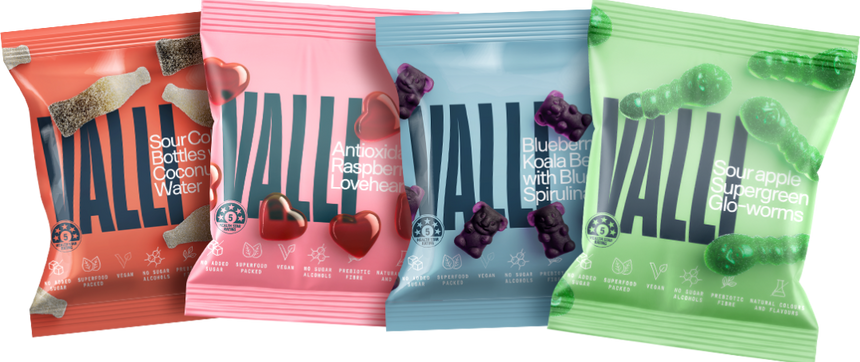
Valli Snacks’ Antioxidant Raspberry Lovehearts were built specifically around this idea — a raspberry-flavoured, heart-shaped gummy with real goji berry and açaí incorporated directly into the formulation. The antioxidant contribution comes along with a snack you’re already reaching for, rather than requiring a separate smoothie routine you have to remember to maintain. Combined with the rest of the range’s no-added-sugar, prebiotic-fibre approach, it turns “eat more antioxidants” from good advice you nod along to into something that happens automatically.
Setting Realistic Expectations
It’s worth being clear-eyed about what a functional gummy can and can’t do. A goji-and-açaí-infused snack is a genuinely useful addition to an already reasonably balanced diet. It is not a substitute for eating vegetables, and it won’t meaningfully offset a diet that’s otherwise low in whole plant foods. The real value is in making a good habit slightly easier and more enjoyable to sustain — not in providing a complete nutritional solution by itself.
A Few Other Everyday Antioxidant Sources Worth Knowing
If you’re building a broader antioxidant-conscious diet beyond any single ingredient, these are consistently well-supported:
-
Berries generally — blueberries, blackberries, and raspberries all rank highly
-
Dark leafy greens — spinach and kale, in particular
-
Dark chocolate — 70%+ cocoa content specifically
-
Green tea — a strong source of catechins, another antioxidant compound class
-
Coffee — often underrated, but a major contributor to total antioxidant intake for regular drinkers, simply due to volume consumed
The Bottom Line
Free radicals and oxidative stress are genuine, well-understood biological processes, and antioxidant-rich foods are a legitimate, evidence-backed way to support your body’s defence against them — not just a wellness buzzword. Goji berry and açaí are two of the more concentrated sources available, but the bigger win for most people is finding a realistic, repeatable way to get antioxidants into a routine consistently, rather than chasing the single “best” superfood.
Want antioxidants folded into something you’ll actually keep eating? Try the Antioxidant Raspberry Lovehearts — real goji and açaí, in a snack that doesn’t require a new habit.