
Gut health has become one of the most talked-about areas of wellness in recent years, and for good reason — the trillions of bacteria living in your digestive system influence far more than just digestion, playing a role in immunity, mood, and even skin health. What’s less commonly discussed in detail is just how directly your everyday snacking habits, particularly sugar intake, shape the health of that internal ecosystem.
Here’s a closer look at the connection, and what it means for how you snack.
A Quick Primer on the Gut Microbiome
Your gut is home to an enormous and diverse community of bacteria, collectively known as the gut microbiome. A healthy, diverse microbiome is associated with better digestion, more stable energy levels, stronger immune function, and even improved mood regulation, since a significant portion of the body’s serotonin is produced in the gut. An imbalanced or low-diversity microbiome, on the other hand, has been linked in research to digestive issues, increased inflammation, and a range of downstream health effects.
Diet is one of the most significant, modifiable factors influencing microbiome composition — arguably more than almost any other lifestyle factor, since gut bacteria respond directly and relatively quickly to what you eat.
How Sugar Affects the Gut Microbiome
High sugar intake, particularly from refined and added sugars, has been associated with reduced microbial diversity and can encourage the growth of less beneficial bacterial strains at the expense of beneficial ones. Some research suggests that diets high in added sugar and low in fibre can shift the microbiome toward a composition associated with increased inflammation over time.
This doesn’t mean any sugar is catastrophic for gut health — occasional treats aren’t going to meaningfully derail a generally healthy microbiome. The bigger issue is a consistent pattern of high-sugar, low-fibre snacking, which over time shapes the microbiome in a less favourable direction, and tends to compound with the other common features of a high-sugar diet (lower overall fibre and nutrient diversity).
Why Fibre Is the Other Half of the Equation
If sugar is one side of the gut health coin, fibre is the other — and it’s arguably more important. Fibre, particularly prebiotic fibre, serves as food for beneficial gut bacteria, helping them thrive and multiply. Most dietary guidelines recommend 25-30 grams of fibre per day, and most people fall well short of that target, which represents a bigger gap in most diets than excess sugar does on its own.
This is why simply removing sugar from a snack isn’t the complete gut health picture — a snack that removes sugar but doesn’t add any meaningful fibre is a smaller win than one that does both simultaneously.
Snacking Patterns That Support Gut Health
Choose snacks with a named prebiotic fibre source. Ingredients like inulin, chicory root fibre, or isomalto-oligosaccharide directly feed beneficial gut bacteria, unlike sugar or most sugar alcohols.
Prioritise whole food snacks where practical. Fruit, vegetables, nuts, and legumes bring naturally occurring fibre alongside a wide range of other beneficial plant compounds.
Include fermented foods regularly. Yoghurt, kefir, kimchi, and sauerkraut introduce beneficial bacteria directly (probiotics), complementing the fibre-focused approach of feeding the bacteria already present (prebiotics).
Watch for excess sugar alcohols. While not sugar in the traditional sense, large amounts of certain sugar alcohols can disrupt digestion and cause bloating in sensitive individuals — worth moderating even in “sugar-free” products.
Diversify your snack choices. A wider variety of plant-based snacks over the course of a week supports greater microbial diversity than eating the same few foods repeatedly, since different fibre types feed different bacterial strains.
The Specific Role of Prebiotic Fibre in Treat-Format Snacks
One of the more practical developments in the better-for-you snack space has been the emergence of treats — particularly gummies — that use prebiotic fibre as the primary sweetening agent rather than sugar. This effectively flips the usual gut health equation for candy: instead of a snack that’s neutral-to-negative for gut health (high sugar, no fibre), it becomes a snack that actively contributes to fibre intake while still satisfying a sweet craving.
This matters specifically for people who struggle to hit daily fibre targets through diet alone, since it turns an existing snacking habit (reaching for something sweet) into a small, consistent contribution toward a nutritional gap, rather than working against it.
How Valli Snacks Approaches This
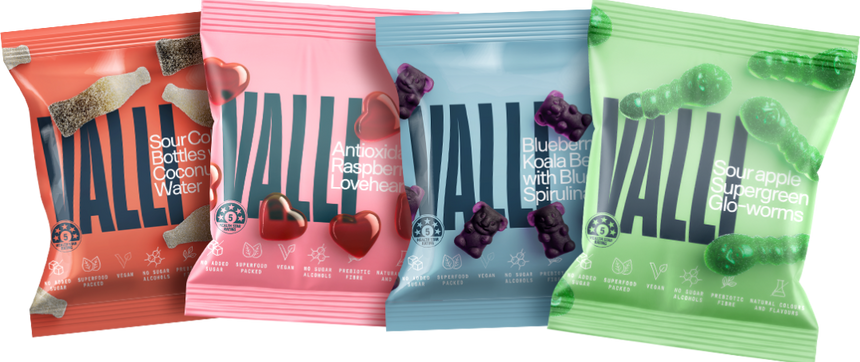
Every flavour across the Valli Snacks range is formulated with isomalto-oligosaccharide as the primary sweetener, delivering meaningful prebiotic fibre per serving while completely avoiding added sugar. This is a structurally different approach from simply removing sugar and leaving a nutritional gap — it replaces sugar with something that actively feeds gut bacteria, aligning a treat-format snack with genuine gut health goals rather than working against them.
Signs Your Gut Might Benefit From a Snacking Adjustment
While only a healthcare professional can properly assess gut health, some common everyday signals worth paying attention to include regular bloating, inconsistent digestion, low energy after meals, or noticeable sugar cravings that feel difficult to satisfy. None of these are diagnostic on their own, but they’re often worth examining alongside overall dietary patterns, including snacking habits specifically.
Building a Gut-Friendly Snacking Routine
- Audit your current snacking pattern for a few days — note how often snacks are high in sugar with minimal fibre.
- Swap in one or two fibre-forward alternatives per day, rather than attempting a complete overhaul at once.
- Include a fermented food source at least a few times per week.
- Choose treat-format snacks (for the days you want something sweet) that use fibre-based sweeteners rather than sugar or sugar alcohols.
- Stay consistent — microbiome shifts happen gradually over weeks, not overnight.
The Bottom Line
Your everyday snacking habits have a more direct impact on gut health than most people realise, largely through the sugar-to-fibre ratio of what you’re regularly reaching for. Choosing snacks — including treats — that lean toward prebiotic fibre rather than added sugar is one of the simplest, most sustainable ways to support a healthier gut microbiome over time, without requiring a complete diet overhaul.
Looking for a treat that supports gut health instead of working against it? Explore the Valli Snacks range — sweetened with prebiotic fibre, made with no added sugar.