
Halloween and Easter are the two biggest lolly-saturated occasions of the year, and for parents trying to be thoughtful about sugar intake, both can feel like swimming against a very strong current of tradition. Rather than a general guide, here are the specific questions parents actually ask when trying to navigate these two occasions — answered directly.
“Do I have to ban lollies from these occasions entirely?”
No, and trying to usually backfires. Both Halloween and Easter are built entirely around the ritual of collecting and eating sweet treats — trick-or-treating and egg hunts don’t really work as concepts without it. Outright restriction tends to make the excluded treats more desirable, not less, and turns what should be a fun occasion into a source of conflict. The more realistic and effective goal is choosing better-formulated versions of the treats themselves, not removing the treat category altogether.
“What actually makes an alternative treat worth switching to?”
A few concrete things separate a genuine upgrade from a relabelled version of the same product:
-
No added sugar, ideally sweetened with a fibre-based alternative rather than sugar alcohols, which can cause digestive discomfort in the volume kids often eat on these occasions specifically
-
Individually wrapped or portioned, both for handing out at the door and for basket/bag control afterward
-
Genuinely appealing to kids on sight and taste — an alternative that gets left in the bowl or traded away hasn’t actually solved anything
-
Clear allergen information, particularly nut-free, given how common this consideration has become at school and among other trick-or-treating households
“My kids are going to collect a huge haul either way — what do I actually do with it?”
Banning the collected candy outright tends to create more desire around it, not less, so most parents find a “trade-in” system works better in practice: kids trade a portion of their trick-or-treat haul for a smaller number of better-formulated treats, keeping the fun of the tradition intact while moderating the total sugar volume that actually gets eaten.
Spacing consumption out over the following days — rather than everything being eaten the night of — also meaningfully reduces the impact, and is easier to enforce when part of the haul isn’t loaded with added sugar to begin with.
“Can I hand out something different at my own door without singling anyone out?”
Yes, and this is actually one of the easier swaps to make, since you control the entire supply. Individually wrapped, no-added-sugar gummy treats let you participate fully in the tradition without contributing to the sugar overload most trick-or-treaters are already accumulating door to door. Buying in bulk multipacks makes this practical for Halloween’s typical volume.
“Does Easter have to be all chocolate?”
Not at all, and mixing formats often makes the egg hunt or basket feel more exciting, not less. Filling part of an egg hunt or Easter basket with better-formulated gummy treats — shaped or coloured to suit the occasion — adds variety without diminishing the excitement of the hunt itself. A mixed basket, with a smaller amount of traditional chocolate alongside a larger portion of no-added-sugar treats, tends to feel just as exciting to kids as an all-chocolate haul, provided the alternative treats are genuinely tasty rather than an obvious “diet” substitute.
“Why do so many ‘healthy’ alternatives get left uneaten?”
Because kids can tell, almost instantly, when something is trying to be the healthy option rather than just being a good treat. A plain, under-flavoured, or oddly textured substitute reads as different — and worse — than the real thing the moment it’s tasted, and gets either left in the bowl or actively avoided in favour of other candy at the same event.
The alternative that actually works is one that looks and tastes like a genuine treat in its own right — bright, fun, and flavourful — where the better formulation underneath is invisible rather than the headline feature. Kids need to choose it because they want it, not because they’ve been told it’s the responsible option.
“What does a genuinely well-built alternative basket look like?”
A practical structure that tends to work well:
-
A small amount of traditional chocolate, to preserve the classic Easter experience
-
A generous portion of no-added-sugar gummy treats in bright colours and fun shapes
-
A non-food item — a small toy, book, or activity — to reduce total candy volume without reducing the overall excitement of the basket
-
Fresh fruit arranged playfully, for a small nutritional counterbalance that doesn’t need to carry the whole basket alone
“Is there a brand that actually does this well?”
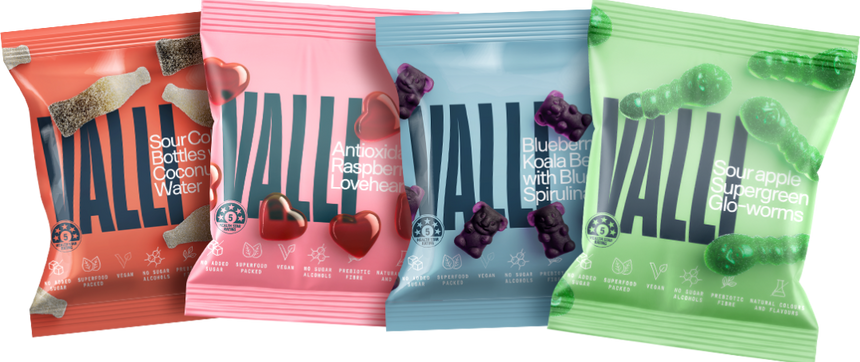
Valli Snacks’ range — including the heart-shaped Antioxidant Raspberry Lovehearts and the naturally blue Blueberry Koala Bears with Blue Spirulina — fits this exact brief. Every flavour is made without added sugar and formulated with real functional ingredients, making it a solid option for Halloween lolly bowls, trick-or-treat bags, or Easter basket fillers, without requiring kids to notice or care that what they’re eating is better-formulated than standard candy.
“What about the volume problem — kids collecting way more than one basket’s worth?”
This is really a pacing problem more than a formulation problem, and it applies regardless of what candy is involved. A few things help specifically:
-
Set an expectation in advance about how many pieces come out of the stash per day, rather than an open-ended free-for-all
-
Store the bulk of the haul somewhere less immediately visible — out of sight genuinely does reduce out of mind for most kids
-
Let kids keep some agency over which pieces they choose each day, since autonomy tends to reduce the urge to sneak extra
The Bottom Line
Neither Halloween nor Easter needs to be an all-or-nothing proposition when it comes to lollies. Choosing genuinely appealing, no-added-sugar alternatives — rather than obvious “health food” substitutes that kids can spot instantly — lets both occasions keep their full sense of fun, while giving parents a meaningfully better sugar profile across the day without a single argument at the door.
Stocking up for Halloween or Easter? Shop the Valli Snacks range — treats kids genuinely choose, without the added sugar overload.