

Every parent has lived this moment: you pack something nutritious, thoughtful, maybe even a little proud of yourself for including it — and it comes home at 3pm, completely untouched, while the rest of the lunchbox is empty. It’s not a failure of effort. It’s a mismatch between what adults think “healthy” should look like and what actually gets eaten by a genuinely hungry, genuinely picky kid.
The Real Problem Isn’t Nutrition Knowledge
Most parents already know the textbook answer: more fruit, less sugar, more whole foods. The problem was never information. The problem is that kids don’t make food choices based on nutrition labels — they make them based on colour, texture, familiarity, and whether something looks like a treat or looks like a chore.
That means the actual lunchbox challenge isn’t “what’s healthy,” it’s “what’s healthy that a specific, opinionated seven-year-old will actually eat without a negotiation.” Those are two very different design problems, and most snack aisles are only solving the first one.
Running the Lunchbox Test
Here’s a simple filter worth applying to anything before it goes in a lunchbox: would this survive if it had to compete, unsupervised, against whatever their friends are trading at the table? If the honest answer is “probably not,” it’s likely to come home uneaten regardless of how nutritious it is on paper.
This is where a lot of well-intentioned swaps quietly fail. Plain rice cakes, unsweetened dried fruit, and raw vegetable sticks with no dip are all reasonable choices nutritionally — but they lose the lunchbox test against a friend’s packet of chips or a shop-bought treat almost every time.
What Actually Passes
A few categories consistently survive the lunchbox test, because they don’t ask a child to compromise on what food is “supposed” to feel like:
Pre-cut fresh fruit. Apple slices (with a squeeze of lemon juice to stop browning), grapes, or berries remain one of the few “healthy” categories kids reliably finish, mostly because fruit is naturally sweet and doesn’t need convincing.
Cheese and crackers. Familiar, crunchy, salty — ticks every box a kid actually cares about, while quietly delivering protein and calcium.
Something that already looks like a treat, reformulated underneath. This is the category most parents overlook, and it’s arguably the most powerful one. If a snack already looks and tastes like candy, a kid has zero resistance to it — the “healthier” part just needs to be true beneath the surface, not announced on the wrapper.
Why the Third Category Matters Most
Kids don’t reward effort, they reward experience. A snack that visibly signals “this is the healthy option” — through packaging, colour, or an odd aftertaste — creates resistance before a single bite is taken. A snack that simply tastes like the treat it resembles removes that resistance entirely.
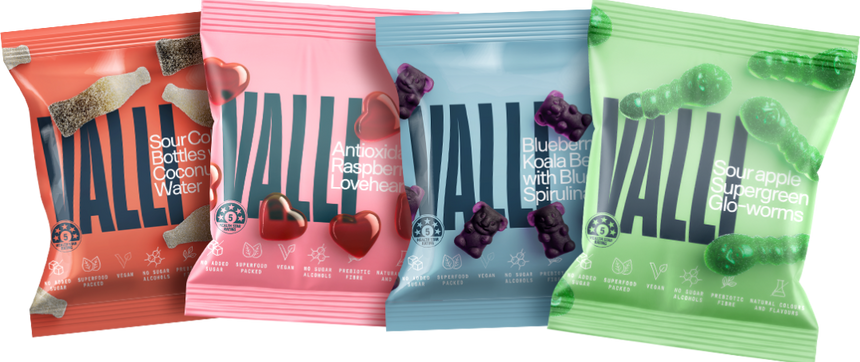
This is the specific gap that better-for-you gummies have started filling well. A well-formulated gummy lolly, made without added sugar and with functional ingredients folded in invisibly, passes the lunchbox test on the child’s terms — bright, chewy, sweet — while quietly passing the parent’s test underneath.
What “Reformulated Underneath” Actually Means
Not every product claiming to be a healthier lunchbox lolly delivers on it. When you’re comparing options, a few checks separate genuine reformulation from a health-halo relabel:
No added sugar, and not just swapped for sugar alcohols. Large amounts of sugar alcohols can cause digestive discomfort in kids, so a fibre-based sweetener (like isomalto-oligosaccharide) is a stronger choice.
Natural colours, not synthetic dyes. Look for named plant or algae extracts rather than a generic “colour” listing.
A genuine allergen-safe profile, particularly nut-free, given how common school policies around this have become.
A texture that matches expectation. If it doesn’t chew like a lolly, it won’t read as a lolly to a five-year-old, no matter how good the ingredient list is.
Where Valli Snacks Fits the Lunchbox Test
Every flavour in the Valli Snacks range was built with exactly this test in mind — bright, chewy, genuinely lolly-like gummies that happen to carry no added sugar, natural colouring from ingredients like spirulina and beetroot, and a fully vegan, nut-free formulation. From a kid’s perspective at the lunch table, it’s simply a lolly worth trading for. From a parent’s perspective packing the box that morning, it’s a genuinely different ingredient list underneath.
Building a Rotation, Not a Single Perfect Snack
The most sustainable lunchbox strategy isn’t finding one flawless item — it’s building a small rotation of three or four trusted options so packing lunch doesn’t become a daily negotiation:
-
A piece of whole fruit
-
A protein source — cheese, a boiled egg, or a small yoghurt pouch
-
A wholegrain option — crackers or a small wrap
-
A treat-format item that passes the lunchbox test, like a no-added-sugar gummy
Rotating through a short list like this means decisions get easier over time instead of harder, and kids get enough variety that nothing becomes boring or gets automatically traded away.
A Note on Reading Labels for Kids Specifically
Marketing aimed at kids’ lunchboxes is some of the most aggressively “healthy-washed” on the shelf. A few fast checks help cut through it:
Check where sugar sits in the ingredients list — first or second position undermines any front-of-pack claim
Look for a genuine Health Star Rating, not just packaging language
Watch for “fruit juice concentrate” used purely to sweeten rather than flavour
Confirm allergy claims are explicit, not implied by omission
The Bottom Line
The lunchbox test isn’t about whether a snack is nutritious in a lab sense — it’s about whether it survives contact with an actual child’s preferences at an actual lunch table. The snacks that pass consistently are the ones that don’t ask kids to compromise on what a treat is supposed to feel like, while quietly delivering something better underneath.
Want a lunchbox lolly that passes the test on both sides? Shop the Valli Snacks range — built to be eaten, not just packed.