Scroll through any wellness feed lately and you’ll spot it: an almost electric blue smoothie bowl, latte, or gummy bear, captioned “naturally blue.”
That colour is usually coming from one ingredient — blue spirulina.
It’s become one of the most talked-about additions in the better-for-you food space, and for good reason.
What Exactly Is Blue Spirulina?
Blue spirulina is an extract taken from regular spirulina, a blue-green algae that’s long been used as a nutrient-dense supplement.
The extract itself is called phycocyanin, a natural pigment-protein that gives the algae its vivid blue colour once isolated.
Unlike the more common green spirulina powder, which has an earthy, slightly grassy taste, blue spirulina is milder in flavour. That’s exactly why it’s found its way into sweeter foods like drinks, baked goods, and gummies.
Why It’s Suddenly Everywhere
For years, food brands wanting a bright blue product had two options: use an artificial dye, or skip the colour entirely.
Blue spirulina changed that.
It gives formulators a genuinely natural way to hit that eye-catching blue without synthetic ingredients — which matters more than ever to shoppers reading ingredient labels closely.
It’s also riding the broader “eat the rainbow” and functional-food trends, where consumers are drawn to foods that look vibrant and are backed by a nutritional story, not just visual appeal.
Is Blue Spirulina Actually Good For You?
Spirulina in general is well known for its protein and antioxidant content.
The blue extract specifically is prized less for a standalone nutrition punch, because the amounts used for colouring are typically small, and more for what it represents: a natural alternative to artificial dyes like Brilliant Blue FCF, which some consumers prefer to avoid.
In short — it’s not a superfood powerhouse in the tiny quantities used for colour, but it’s a meaningfully cleaner choice than synthetic dye, and it comes from a genuinely nutrient-dense source.
Where You’ll Find It
Blue spirulina shows up in:
• Smoothie bowls and “unicorn” style drinks
• Blue-hued lattes, often marketed as “blue majik” lattes
• Natural food colouring for baking
• Gummies and lollies
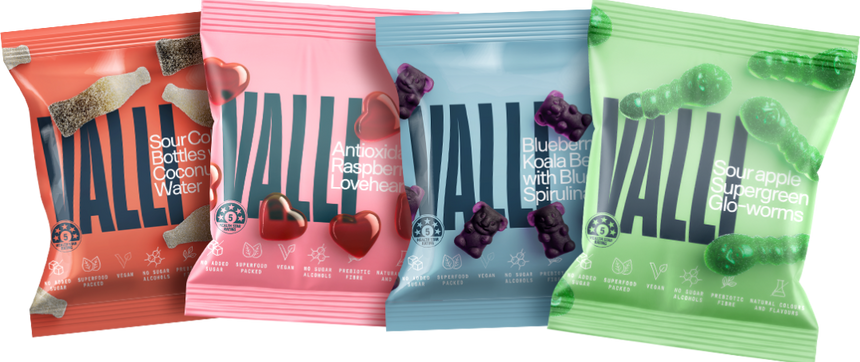
You’ll also find it in Valli Snacks’ Blueberry Koala Bears with Blue Spirulina, which use the extract to naturally colour the gummies without any artificial dye, paired with a genuine blueberry flavour.
What to Check on a Label
If a product claims to use blue spirulina, look for:
• “Phycocyanin” or “blue spirulina extract” listed directly in the ingredients, not just in the marketing copy
• No secondary artificial colour also listed, as some products use both to hit a specific shade
• A brand that explains why they chose it, rather than using “natural” purely as a buzzword
Try It for Yourself
If you’re curious what naturally coloured, spirulina-based candy actually tastes like, Valli Snacks’ Blueberry Koala Bears are a good place to start.
They’re vibrant blue, blueberry-flavoured, vegan, made with no added sugar, and coloured entirely by real blue spirulina rather than dye.